
Poor Sleep Quality
When sleep feels light, broken, or unrefreshing and recovery never quite catches up.
Poor sleep quality is not always about how long you spend in bed. Many people sleep for seven or eight hours yet wake feeling unrested, foggy, or tense. Others struggle with broken sleep, early waking, or a sense that their body never fully switches off.
Over time, poor sleep affects far more than energy levels. Concentration drops, stress tolerance narrows, recovery slows, and even small physical or mental demands begin to feel heavier than they should. This is often a sign that the body’s recovery systems are not fully engaging overnight.

20 minutes. Personalised. Expert-led.
What is poor sleep quality?
Poor sleep quality refers to sleep that does not adequately restore the body, even if total sleep time appears sufficient. This may include difficulty falling asleep, frequent waking, early waking, or shallow sleep that fails to support physical and mental recovery.
Rather than being a single problem, poor sleep quality often reflects how the nervous system, stress hormones, and recovery processes are functioning together.
Why sleep problems are so common
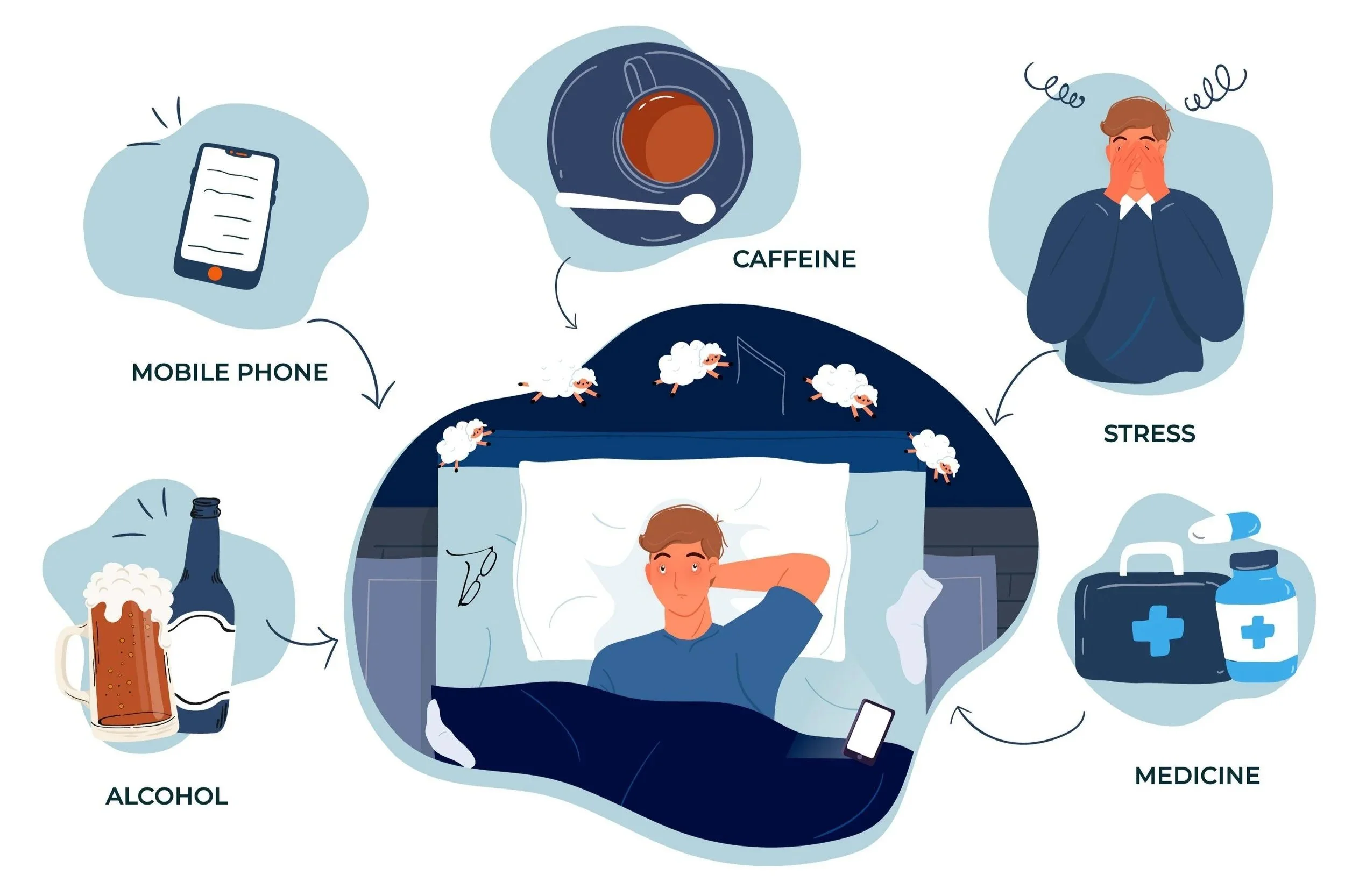
Modern life places constant demands on the nervous system. Mental load, irregular schedules, artificial light, late meals, alcohol, caffeine, stress, and screen exposure can all interfere with the body’s natural sleep–wake rhythm.
When these factors persist, the nervous system may remain partially activated at night, preventing the deep, restorative sleep needed for recovery. Over time, poor sleep becomes the norm rather than the exception.
Why time in bed doesn’t always fix it
Many people try to solve sleep problems by going to bed earlier or staying in bed longer. While helpful short-term, this does not always address the underlying issue.
If the nervous system remains in a heightened state, the body may struggle to enter deeper stages of sleep. This can leave sleep feeling light or fragmented, even when habits appear “healthy” on the surface.
The impact of ongoing poor sleep
When sleep quality remains low, the effects often extend beyond tiredness. People may notice reduced stress tolerance, slower recovery from exercise or illness, increased pain sensitivity, and difficulty concentrating.
Over time, poor sleep can reinforce stress, creating a cycle where fatigue worsens sleep and poor sleep worsens fatigue.

Supporting better sleep quality
Improving sleep quality often means supporting the systems that allow the body to downshift at night. This includes nervous system regulation, circulation, and recovery processes that prepare the body for rest.
When these systems are supported, sleep tends to become deeper, more consistent, and more restorative over time.
What you gain from a consultation
A consultation is a structured conversation designed to understand how sleep issues are showing up in your body and what may be preventing effective overnight recovery. We start by listening carefully to your sleep patterns, daily demands, stress levels, and energy fluctuations.
From there, we help make sense of what’s happening physiologically and identify the key factors affecting sleep quality. The aim is to support your body back toward balance and create a clear, practical way forward that helps sleep feel more restorative over time.
Clients often say the most valuable part of the consultation is understanding why their sleep feels the way it does and having a sensible plan that actually improves how they feel day to day.
20 minutes. Personalised. Expert-led.
