Bloated or Feeling Puffy?
A stomach that feels bloated and a body that feels puffy can look similar in the mirror, but they are not necessarily the same problem. Digestive bloating is commonly linked to gas, constipation, food intolerance or irritable bowel syndrome. Fluid-related puffiness can feel more like heaviness, tightness or swelling.
That distinction matters because Manual Lymphatic Drainage is not a universal treatment for every bloated stomach. It is a gentle massage technique intended to encourage the movement of fluid through the superficial lymphatic system. It may be relevant when puffiness or fluid retention is part of what you are noticing, but it cannot diagnose or treat the digestive cause of persistent bloating.
Why do I feel bloated?
The NHS says the most common reason for bloating is gas in the gut . Fizzy drinks, some foods, swallowing air, constipation, food intolerance, coeliac disease and IBS can all contribute. Some people also feel more bloated around their period.
If the sensation changes after eating, improves after passing wind or opening your bowels, or comes with altered bowel habits, the cause may be digestive rather than lymphatic. Massage should not be used to cover up symptoms that need medical attention.
Bloating and fluid retention are not the same
Bloating usually describes pressure, fullness or visible distension in the abdomen. Fluid retention describes excess fluid in body tissues and may show up as puffiness, tightness or swelling. You can experience both, but one does not prove the other.
Lymphoedema is different from ordinary temporary puffiness . It is a chronic condition caused by a problem with the lymphatic system and should be assessed and managed by appropriately trained healthcare professionals.
What is Manual Lymphatic Drainage?
Manual Lymphatic Drainage uses slow, light and rhythmic skin movements. It is not deep-tissue massage. The aim is to work gently with superficial lymphatic pathways rather than applying force to muscles.
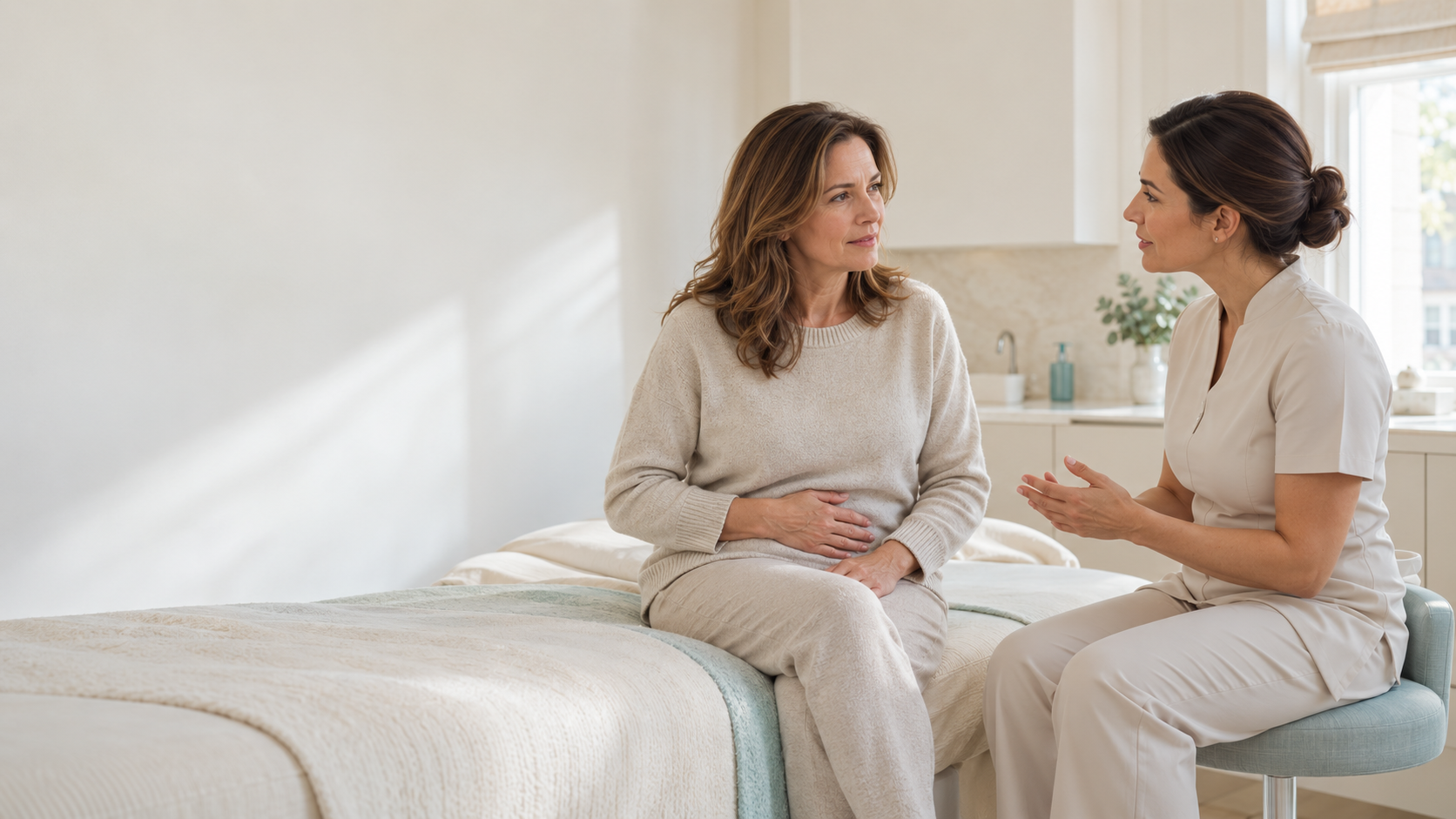
At LondonCryo, the first part of the appointment is a conversation about what you are experiencing, your health history and what you hope to improve. Treatment only proceeds when it is considered suitable. We do not promise weight loss, fat loss, detoxification or a cure for digestive bloating.
When might a session feel relevant?
- You describe general puffiness or heaviness rather than sharp pain.
- You feel temporarily swollen after prolonged sitting or travel.
- You want a gentle treatment rather than deep muscular pressure.
- You have been cleared by your clinician following an operation and want to discuss appropriate support.
Suitability is individual. A treatment that feels useful to one person may not address the cause of another person’s symptoms.
A gentle at-home reset
If you are generally well and have no contraindications, begin with five minutes of slow diaphragmatic breathing rather than forceful abdominal massage.
- Lie or sit comfortably and relax your shoulders.
- Place one hand on your upper chest and the other on your abdomen.
- Breathe in slowly through your nose and allow your abdomen to expand comfortably.
- Exhale gently without straining.
- Repeat for five minutes, then take a short, easy walk if comfortable.
Do not copy strong massage routines from social media. Specialist lymphatic techniques should be taught by an appropriately trained practitioner, particularly if you have diagnosed lymphoedema or have undergone cancer treatment or lymph-node surgery. Cancer Research UK explains how specialist Manual Lymphatic Drainage is used in lymphoedema care .
When not to massage your abdomen
Do not perform abdominal massage if you are pregnant, have a recent abdominal wound or operation, have inflammatory bowel disease during a flare, feel acutely unwell or have been advised against it by a clinician. Seek professional guidance if you have heart, kidney or circulatory disease, a history of blood clots, diagnosed lymphoedema, active cancer treatment or unexplained swelling.
Never massage an area that is suddenly swollen, hot, red or painful. Sudden one-sided swelling, chest pain or breathlessness requires urgent medical assessment.
When bloating needs medical advice
Speak to your GP if bloating does not go away or keeps returning. Seek advice sooner if it comes with unintentional weight loss, blood in your stool, vomiting, severe or worsening pain, difficulty swallowing, a new lump or a marked change in bowel habits. Persistent bloating can occasionally be a symptom of a more serious condition, so it should not be self-diagnosed as “lymphatic congestion”.
What to expect at LondonCryo
Your 60-minute Manual Lymphatic Drainage appointment takes place at our St John’s Wood clinic. Your therapist will ask what you have noticed, discuss relevant health information and explain the gentle technique. If your symptoms suggest that treatment is not suitable, we will advise you to seek the appropriate medical guidance rather than proceed.
The treatment is £149 and is subject to individual suitability and appointment availability.
Frequently asked questions
Can lymphatic drainage get rid of a bloated stomach?
Not necessarily. Many cases of bloating are caused by gas or digestive factors, which lymphatic drainage does not treat. A session may feel relevant when fluid-related puffiness or heaviness is part of the picture, but results vary and no specific reduction can be guaranteed.
Is lymphatic drainage the same as deep-tissue massage?
No. Manual Lymphatic Drainage uses light, slow and rhythmic movements intended to work with superficial lymphatic pathways. Deep pressure is not the objective.
Will lymphatic drainage make me lose weight or body fat?
No. It is not a weight-loss or fat-loss treatment. Any short-term change in puffiness should not be described as fat loss.
How long is the LondonCryo treatment?
The Manual Lymphatic Drainage treatment lasts 60 minutes and costs £149.
How often should I book lymphatic drainage?
There is no universal schedule. Frequency depends on why you are booking, how you respond and whether treatment remains suitable. Your therapist can discuss this without promising a fixed outcome.
Can I have lymphatic drainage after surgery?
Only after your surgeon or treating clinician has cleared you and any wounds have healed sufficiently. Post-operative needs vary, and specialist care may be more appropriate in some cases.
Where can I book lymphatic drainage in London?
LondonCryo offers 60-minute Manual Lymphatic Drainage treatments at 82 St John’s Wood High Street, London NW8 7SH.
Feeling puffy, heavy or uncomfortable?
Book a 60-minute Manual Lymphatic Drainage treatment for £149 at LondonCryo St John’s Wood.
BOOK MANUAL LYMPHATIC DRAINAGEImportant: LondonCryo provides wellness services and does not diagnose or treat the medical causes of bloating, lymphoedema or swelling. Persistent, painful or unexplained symptoms require appropriate medical advice. Subject to individual suitability and availability.
